FDA early alert: ButterflyBVM bag-valve-mask resuscitators, removal of lots 000109 to 000117 and pre-use test for others
Published November 8, 2026 · Coverage November 1–7, 2026, Pacific · High priority
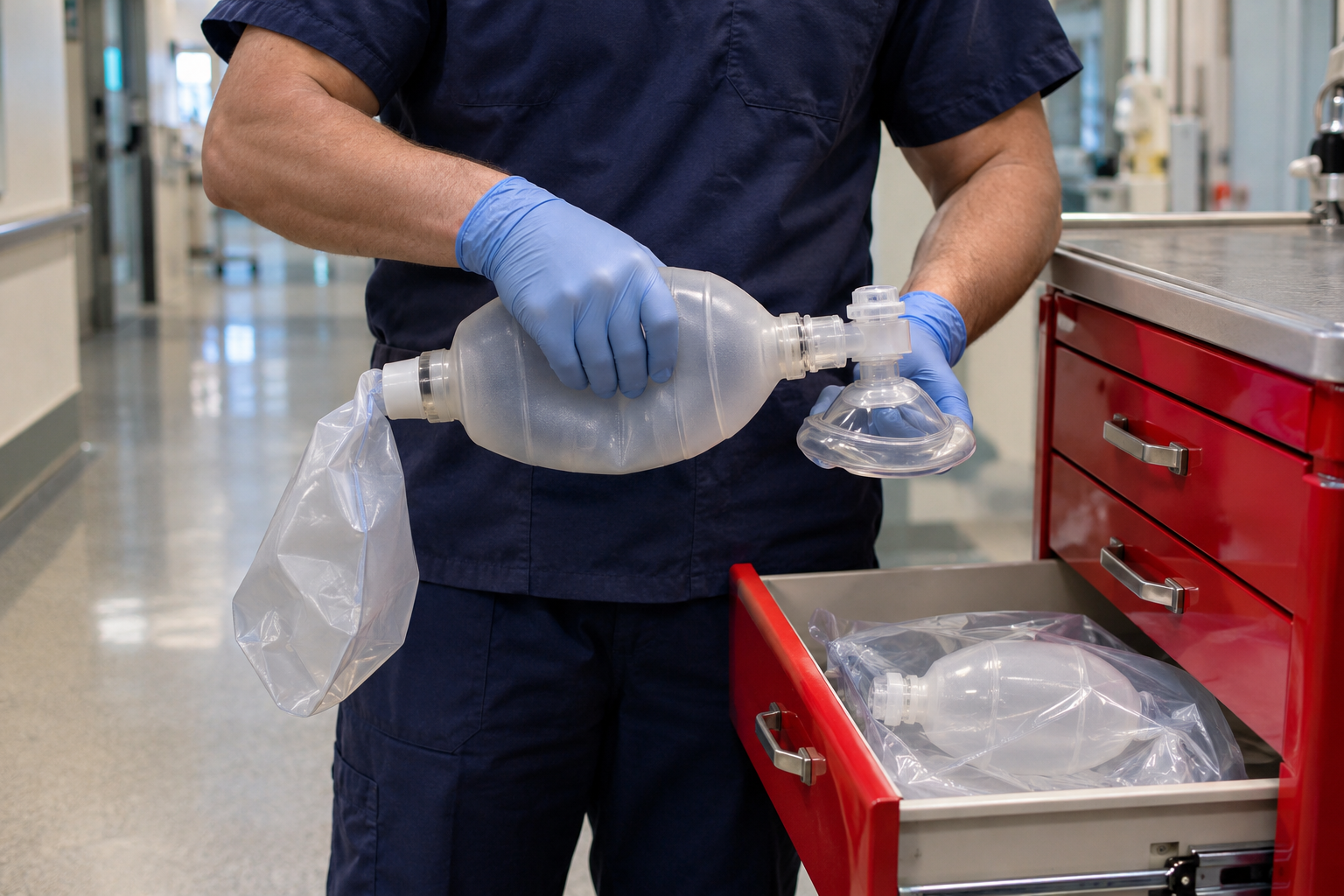
FDA issued an Early Alert on November 3, 2026 about Compact Medical's "Urgent Medical Device Recall" for certain lots of ButterflyBVM single-use bag-valve-mask resuscitators. Lots 000109 through 000117 are to be removed; individually listed earlier lots, numbered between 000081 and 000108 on the FDA page, get a correction: perform the Pre-Use Test before every use and do not use any unit that fails. The reason is a potential hole in the bellows, which FDA says can cause inadequate ventilation and hypoxia. Compact Medical sent letters on September 26 and October 7, 2026, and as of November 2, 2026 had reported no serious injuries or deaths.
Background
The ButterflyBVM is a bag-valve-mask (BVM) resuscitator used for manual pulmonary resuscitation and emergency respiratory support. FDA issues an Early Alert to notify the public of a potentially high-risk device issue and says it will update the page as significant new information becomes available. Compact Medical first wrote to customers about possible bellows holes on September 26, 2026, and sent all affected customers a follow-up letter with recommended actions on October 7, 2026.
Who this affects
Hospitals, emergency medical services and any care area stocking ButterflyBVM single-use bag-valve-mask resuscitators (crash carts, code kits, transport).
Why it matters
If a hole develops in the bellows, tidal volume can leak from the device instead of reaching the patient; FDA says the leak can cause inadequate ventilation and hypoxia and, if not corrected, could result in serious injury or death. Clinical engineering, supply chain and respiratory therapy need to locate affected lots in every location (crash carts, kits, storage), replace removal lots only after a replacement BVM is in place, and add the pre-use test for correction lots. Inference: code-cart check lists may need a temporary step.
Required actions
- None stated as a legal requirement; the firm's recommended actions are summarized on the FDA page (letters dated 2026-09-26 and 2026-10-07).
Recommended action
- Inventory all BVMs by lot at every location
- Remove lots 000109 to 000117 once replacements are in place
- Add the Pre-Use Test for correction lots and brief staff
- Keep backup BVMs available
Scope and timing
- Authority status
- Other (Early Alert from FDA's Center for Devices and Radiological Health (CDRH) of a firm-initiated removal and correction)
- Responsible owner
- Clinical Engineering; Supply Chain; Respiratory Therapy
- Publication date
- 2026-11-03
- Other dates
- Firm letters 2026-09-26 and 2026-10-07; injury status as of 2026-11-02
Not established
The FDA page is an Early Alert and states no recall classification.
Sources
Complete edition and supplemental material
This article in the complete report →
Executive triage, source-coverage limitations, context and forward horizons remain in the complete report.
Read the entire Compliance Sweep report →